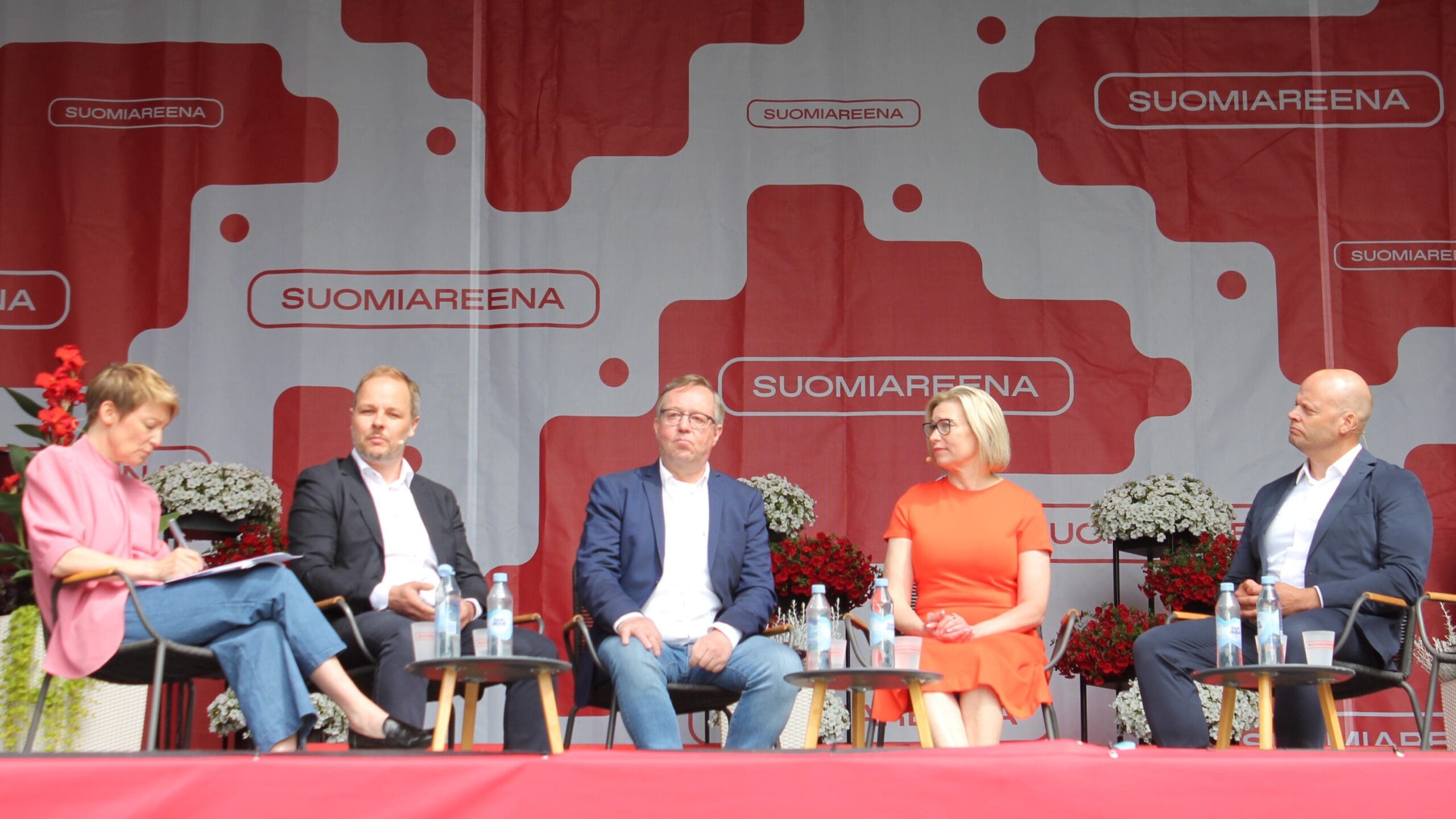
FORCIT Group’s CEO Joakim Westerlund participated in a panel discussion at SuomiAreena, public debate and a platform for discussing and influencing Finland’s future. The topic was Will the defence industry save the Finnish economy – how big an opportunity is being talked about and what it practically requires from Finland. (Unfortunately the debate is in Finnish with no subtitles)
The Finnish defence industry is now seeing an exceptional growth opportunity. The defence industry’s turnover has grown significantly in recent years and growth is expected to continue strongly.
Last year, all European NATO countries invested at least 2% of GDP. Globally, about 2.5% of GDP has long been invested in defence, and in Europe about half of this.
“The growth is not just about the war in Ukraine. Europe has woken up to the fact that defence cannot be outsourced. There have been three decades of underinvestment in defence,” says CEO Joakim Westerlund.
By 2030, Europe will spend 500 billion euros more per year on defence than ten years earlier. This is about six times the Finnish state budget.
Executive Vice President of Protected Mobility in Patria Jussi Järvinen, agrees with Westerlund: “During thirty years of peace, Europe has created a deficit of thousands of billions.”
More employees are needed
The growth in turnover and exports is also reflected in the increase in the number of employees at both FORCIT and Patria. Patria’s number of employees has increased by a thousand since before the war in Ukraine.
The defence industry currently employs around 14,000 people in Finland. By the beginning of the next decade, the sector will directly create 30,000 new jobs.
“I challenge other industrial sectors to do better,” Westerlund commented.
The jobs in the defence industry indirectly create around four other jobs, so the sector’s overall impact on employment in Finland is significant.
Defence spending or income
The public debate often revolves around defence spending and the costs it causes for the state and taxpayers. Westerlund also considered the matter from another perspective. “Last year, we paid many times more in corporate tax than had domestic sales. The majority of our turnover came from exports.”
A concrete example is FORCIT’s TNT plant in Noormarkku, Pori, and the approximately 190 million euro procurement agreement signed with the Finnish Defence Forces about a year ago. The Finnish Defence Forces will buy TNT anyway, but currently the money from the procurement goes outside Europe.
With domestic production, the Finnish Defence Forces will receive more and better quality explosives. “Thanks to the agreement, we will be able to invest in Finland, create jobs and generate tens of millions of euros in export revenue annually,” Westerlund sums up the impact of the TNT production on the Finnish economy.
Bold and fast decisions
Taina Susiluoto, CEO of Technology Industries of Finland, reminded that the current geopolitical situation also creates opportunities for various subcontracting chains. According to her, a small, export-driven country must be bold: “How do we as a nation organize our operations so that companies can seize the opportunities? This is extremely demanding business sector.”
However, this also requires a cultural change in Finland to some extent. According to Susiluoto, decisions must be made bolder and faster. “Within the public sector, we must be able to open doors, market and brand in G2G sales.”
Both Westerlund and Patria’s Järvinen agree with Susiluoto and hope for additional resources to promote exports to the Finnish defence administration as well, so that Finland’s good brand can be utilized effectively. “Finland has great expertise in the defence administration and the cooperation is and has been excellent,” Westerlund praises.
In addition to the hundreds of billions of euros invested by Europe, the rest of the world is also investing in defence. “At the same time, we need to increase capacity, train new people, and be able to innovate and bring new products to the market,” Westerlund reminds.